








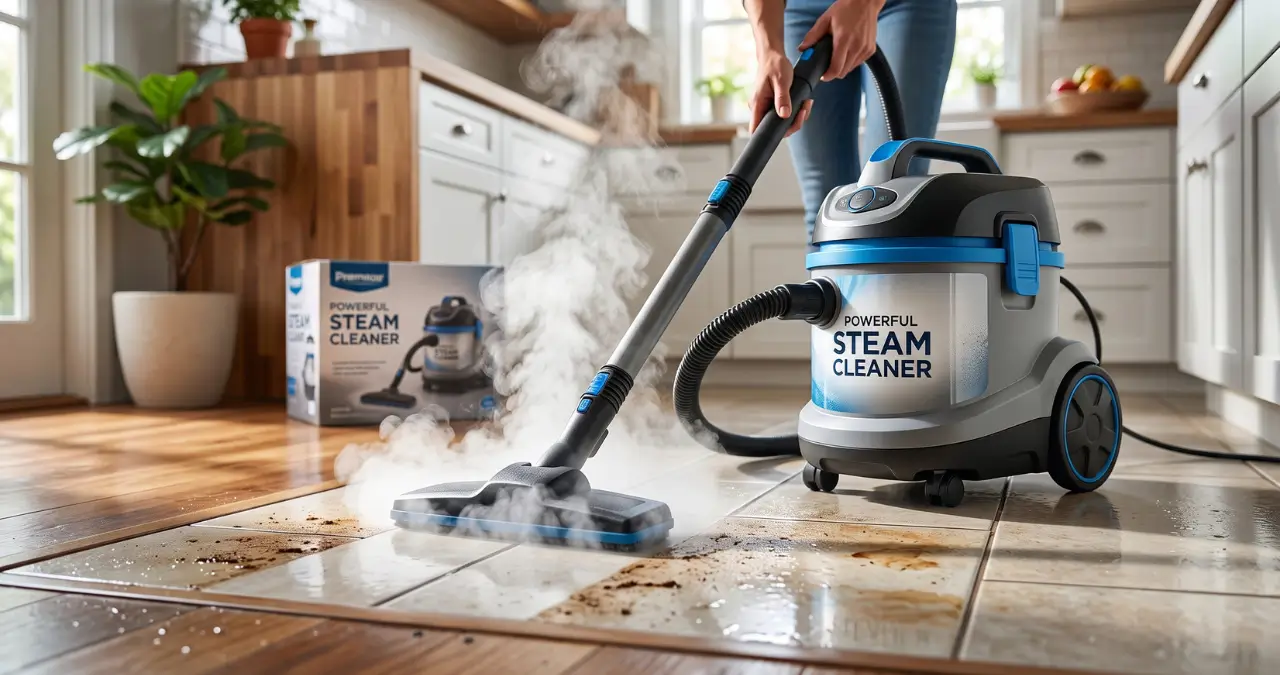
A steam cleaner uses heated water vapor to loosen dirt, grease, grime, and some contaminants from surfaces, often without requiring chemical cleaning solutions. Depending on the design and attachments, you can use one for tile and grout, sealed floors, kitchens, bathrooms, upholstery, carpets, windows, and other household jobs.
However, steam cleaners are not suitable for every surface. High heat and moisture can damage unsealed wood, some flooring, delicate fabrics, and other moisture-sensitive materials. The best results come from choosing the right type of machine and checking the manufacturer’s instructions before using steam.
What Is a Steam Cleaner and How Does It Work?
A steam cleaner is a cleaning appliance that heats water and releases the resulting steam through a nozzle or cleaning head. The heat and moisture help loosen dirt so it can be wiped or lifted away with a cloth, pad, brush, or other attachment.
Unlike a conventional mop, a steam cleaner does not simply spread water across a surface. It delivers heated vapor directly to the area being cleaned.
Most models contain:
- A water tank
- A heating element or boiler
- A hose, nozzle, or floor head
- Cleaning brushes or pads
- Attachments for different surfaces
Steam cleaners range from compact handheld units to canister machines and steam mops. Some newer appliances combine steam cleaning with vacuuming or mopping.
Does a Steam Cleaner Use Chemicals?
Usually, no. Many steam cleaners are designed to work with water alone, which can reduce the need for household cleaning chemicals and leave less chemical residue behind.
You should not automatically add detergent, fragrance, disinfectant, or other chemicals to the water tank. Only use an additive if the specific manufacturer says it is compatible with the machine.
What Can You Clean With a Steam Cleaner?
A steam cleaner can handle many hard surfaces and selected soft surfaces, but compatibility depends on the material, finish, temperature, and appliance attachment. Tile and grout are among the most useful applications, while fabrics and flooring require more caution.
Tile and Grout
Steam is particularly useful for tile and grout because the nozzle can direct heat into narrow grout lines and other difficult-to-reach areas.
A small brush attachment can help loosen accumulated grime around bathroom tiles, shower areas, sinks, and other hard surfaces. Work in manageable sections and wipe away loosened dirt rather than allowing it to remain on the surface.
Kitchen Surfaces
Depending on the manufacturer’s instructions, steam can help loosen grease and buildup around suitable kitchen surfaces, including some sealed countertops, sinks, fixtures, cooktops, and appliance exteriors.
Be careful around electrical components, control panels, unsealed surfaces, and materials that can be damaged by heat or moisture.
Bathroom Surfaces
Bathrooms are one of the most practical places to use a steam cleaner. Suitable applications can include ceramic or porcelain tile, grout, shower doors, sinks, and some bathroom fixtures.
Steam can loosen soap residue and grime, making subsequent wiping easier.
Upholstery and Fabrics
Some steam cleaners include upholstery tools designed for sofas, chairs, curtains, and similar materials.
Always check the item’s care label first. Delicate fabrics such as silk, velvet, and other moisture- or heat-sensitive materials may not be suitable for steam cleaning.
Carpets and Rugs
A steam cleaner may refresh some carpets and rugs when used with the appropriate attachment, but it is important to distinguish steam cleaning from deep carpet extraction.
Consumer Reports notes that steam mops can lightly clean and freshen carpets with a carpet glider, but they are not designed for deep carpet cleaning. A dedicated carpet cleaner is generally the better choice when you need to extract embedded dirt and cleaning solution from carpet fibers.
Which Surfaces Should You Avoid?
The biggest mistake with steam cleaning is assuming that every washable surface can tolerate high heat and moisture. Unsealed wood, certain flooring materials, delicate fabrics, painted surfaces, and some natural stones can be damaged.
Before using a steam cleaner, check the care instructions for both the surface and the appliance.
Unsealed Wood
Avoid steam on unsealed or poorly protected wood. Moisture can penetrate the material, while heat can contribute to finish or structural damage.
Even sealed hardwood requires caution. Some flooring manufacturers permit steam under specific conditions, while others recommend avoiding it entirely. Check your flooring manufacturer’s instructions rather than relying on a general rule.
Laminate Flooring
Laminate flooring deserves particular caution because moisture can enter seams and edges.
Some manufacturers prohibit steam cleaning, while others provide specific instructions for certain products. Always check the manufacturer’s care guide before using a steam mop or steam cleaner on laminate.
Delicate Fabrics
Silk, velvet, and other delicate textiles can react badly to heat and moisture. If the care label does not permit steam cleaning, choose another method.
Painted Walls
Steam can soften, discolor, or damage certain paints and wall finishes. Avoid directing concentrated steam at painted walls unless the manufacturer specifically confirms that the finish is suitable.
Unsealed Stone
Natural stone can be particularly sensitive to moisture, heat, and changes in its protective sealer. Check the stone and sealer manufacturer’s recommendations before steam cleaning.
Steam Cleaner vs. Carpet Cleaner: What’s the Difference?
A steam cleaner primarily uses heated water vapor, while a carpet cleaner generally uses water and cleaning solution followed by extraction to remove moisture and loosened dirt. The two machines can overlap in their uses, but they are designed around different cleaning methods.
| Feature | Steam Cleaner | Carpet Cleaner |
|---|---|---|
| Main method | Heated steam | Water/solution + extraction |
| Tile & grout | Excellent use case | Usually unsuitable |
| Hard floors | Often suitable | Not its main purpose |
| Upholstery | Some models | Many models |
| Carpet refresh | Possible with suitable tools | Yes |
| Deep carpet cleaning | Limited | Better suited |
| Chemical solution | Usually unnecessary | Often used |
| Grout cleaning | Strong use case | Not designed for it |
For hard surfaces, grout, kitchens, and general household detailing, a multipurpose steam cleaner can be more versatile.
If your primary problem is heavily soiled carpeting, a dedicated carpet cleaner is usually the more appropriate appliance. Consumer Reports also recommends vacuuming carpet before using a carpet cleaner because the two machines perform different jobs.
Types of Steam Cleaners
Choosing the right type matters more than simply buying the most powerful-looking machine. A handheld model may be perfect for small jobs, while a canister cleaner makes more sense for whole-house cleaning and multiple surfaces.
Handheld Steam Cleaner
Handheld steam cleaners are compact and easy to store. They work well for small jobs such as grout, sinks, fixtures, kitchen areas, and tight spaces.
Their main limitation is capacity. Smaller water tanks usually mean more frequent refilling during larger cleaning sessions.
Steam Mop
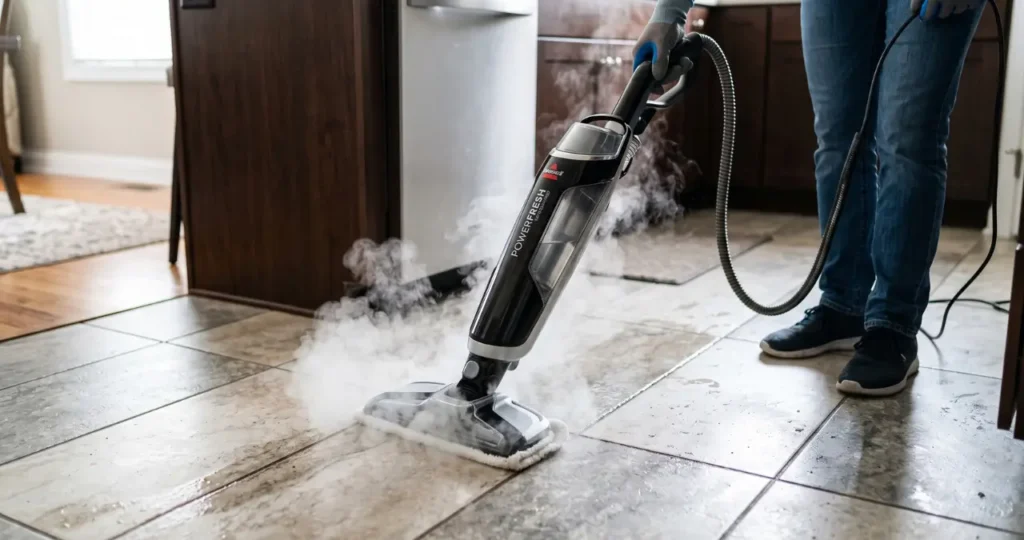
A steam mop is primarily designed for floors. It usually has a mop-style cleaning head and is convenient for regular cleaning of compatible hard flooring.
Some models include detachable handheld units or additional attachments, making them more versatile than basic steam mops.
Canister Steam Cleaner
Canister models typically connect a hose to different cleaning tools. This design makes them useful when you want to clean floors, grout, upholstery, windows, fixtures, and other areas with one machine.
They can be less convenient to store than a compact handheld model, but their versatility can make them worthwhile for larger homes.
Steam Vacuum
A steam vacuum combines steam with vacuuming or other cleaning functions. These multifunction appliances can reduce the number of separate machines you need, although they may cost more and have a larger footprint.
How to Choose the Right Steam Cleaner
The best steam cleaner is the one that matches your cleaning tasks, not necessarily the model with the highest price or largest number of accessories.
Start by deciding what you actually want to clean.
Consider These Features
Steam control: Adjustable steam output gives you more control when moving between different surfaces.
Water-tank capacity: A larger tank can reduce interruptions during longer cleaning sessions, while a smaller tank keeps the appliance compact.
Heating time: Faster heating can be useful when you frequently perform small cleaning jobs.
Attachments: Look for tools that match your actual needs, such as floor heads, grout brushes, upholstery tools, squeegees, and detail nozzles.
Cord and hose length: Longer reach can make it easier to clean large rooms without repeatedly changing outlets.
Weight and storage: A machine that is powerful but difficult to carry or store may end up being used less often.
Maintenance: Check how easily you can empty the tank, clean accessories, wash pads, and follow any descaling requirements.
Current buying guides emphasize water capacity, weight, accessories, maneuverability, and cleaning performance when comparing steam cleaners.
How to Use a Steam Cleaner Safely
Steam is extremely hot, so safe handling matters. Never point the steam nozzle at people, animals, skin, or electrical components, and allow the machine to cool before opening or maintaining it.
Before cleaning:
- Read the appliance manual.
- Check whether the surface is steam-safe.
- Test an inconspicuous area when appropriate.
- Remove loose dirt or debris first.
- Fill the tank according to the manufacturer’s instructions.
- Attach the correct cleaning tool.
- Start with an appropriate steam setting.
- Keep the nozzle moving rather than holding concentrated steam in one spot.
- Wipe away loosened dirt and moisture where necessary.
- Empty and maintain the machine after use.
Never assume that more steam automatically means better cleaning. Excessive heat or moisture can damage a surface even when a lower setting would have been appropriate.
Is a Steam Cleaner Worth Buying?
A steam cleaner can be worth buying if you regularly clean tile, grout, bathrooms, kitchens, sealed hard surfaces, or other compatible materials. It becomes particularly useful when you want one appliance that can handle several different cleaning tasks.
It may be less useful if your main requirement is deep carpet cleaning or if most of your floors and furnishings are made from materials that cannot tolerate steam.
The best buying decision therefore starts with your home’s surfaces rather than the machine itself.
For example, someone with mostly tile floors and heavily used bathrooms may get substantial value from a multipurpose steam cleaner. Someone with wall-to-wall carpet may get more value from a dedicated carpet cleaner.
Final Verdict
A steam cleaner is a versatile household tool that can make many cleaning jobs easier, particularly on compatible hard surfaces such as tile and grout. It can also work on selected carpets, upholstery, curtains, and other materials when the appliance and fabric instructions allow it.
The most important rule is simple: check the surface before using steam. High heat and moisture are useful cleaning tools, but they can also damage the wrong material.
If you mainly need hard-floor and grout cleaning, a steam mop or multipurpose model may be enough. For extensive carpet cleaning, choose a dedicated carpet cleaner instead. Matching the appliance to the job will usually produce better results than buying the biggest or most expensive machine.
Frequently Asked Questions
What is a steam cleaner used for?
A steam cleaner is used to loosen dirt, grease, grime, and other buildup with heated water vapor. Depending on the model and attachments, it can clean tile, grout, bathrooms, kitchens, some floors, upholstery, carpets, curtains, and other compatible surfaces.
Can you use a steam cleaner on carpet?
Yes, some steam cleaners can refresh suitable carpets with the correct attachment. However, steam mops are not designed for deep carpet cleaning; a dedicated carpet cleaner is generally better for extracting embedded dirt.
Can a steam cleaner clean grout?
Yes. Grout is one of the most useful applications for steam cleaning. A concentrated nozzle or small brush can direct steam into grout lines and help loosen accumulated dirt.
Can you use a steam cleaner on hardwood floors?
It depends on the flooring and manufacturer. Unsealed hardwood should generally not be steam cleaned, while some sealed wood floors may have specific manufacturer-approved steam-cleaning instructions. Always check the flooring manufacturer’s guidance first.
Can you use a steam cleaner on laminate flooring?
You should not assume that laminate is steam-safe. Some manufacturers advise against steam because moisture can enter joints and damage the flooring. Check your specific flooring manufacturer’s instructions before using one.
Does a steam cleaner kill germs?
Steam’s high temperature can help reduce or kill certain microorganisms on suitable surfaces, but effectiveness depends on factors such as temperature, contact time, surface, and the specific appliance. Do not treat steam cleaning as a universal substitute for disinfection.
Do steam cleaners need cleaning chemicals?
Many steam cleaners are designed to work with water alone. Do not add cleaning chemicals to the tank unless the manufacturer specifically permits them, because unsuitable additives can damage the appliance.
What is better: a steam cleaner or a steam mop?
A steam mop is generally better for straightforward hard-floor cleaning, while a multipurpose steam cleaner offers more flexibility for grout, fixtures, upholstery, windows, and other tasks. Some appliances combine both designs.
What should you never steam clean?
Avoid steam on surfaces that the manufacturer says are incompatible, particularly unsealed wood, certain laminate or vinyl floors, delicate fabrics, painted surfaces, and some unsealed stone. When in doubt, check the care instructions before applying heat and moisture.