





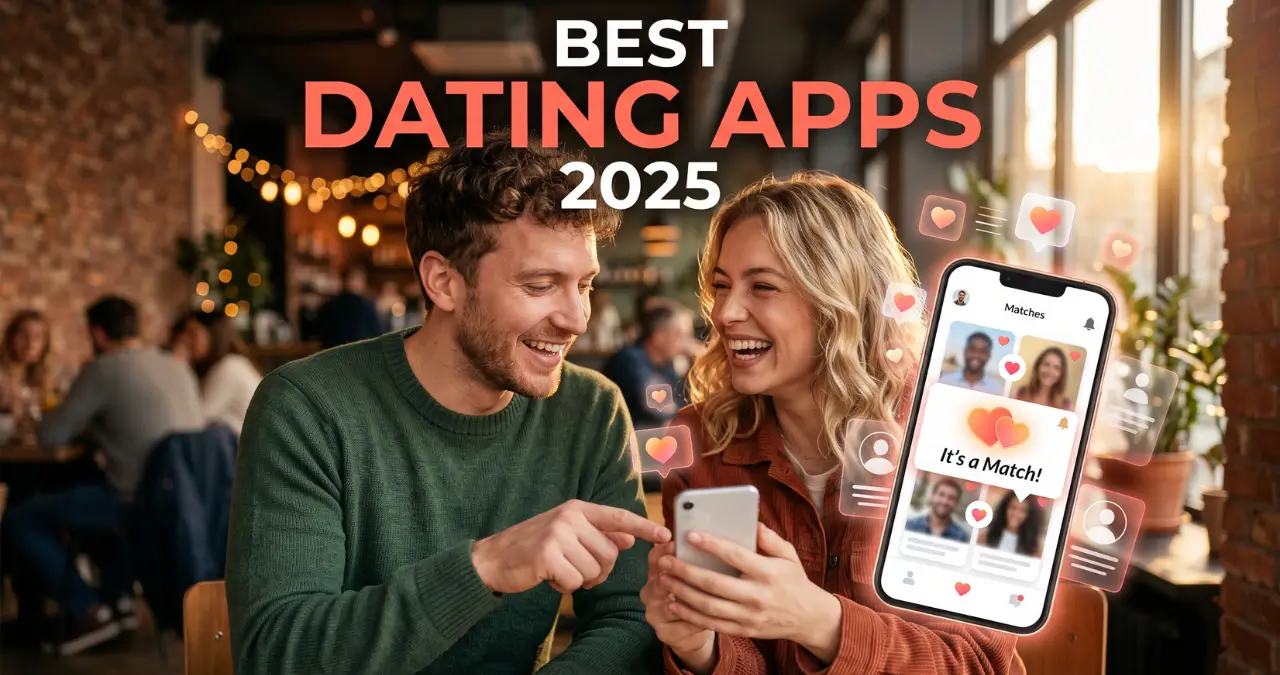
Choosing among the best dating apps 2025 had less to do with finding one universal winner and more to do with finding the app that matched your dating goals. Hinge focused heavily on meaningful conversations, Tinder remained a major choice for broad discovery and casual dating, while Bumble, Match, eharmony, Grindr, and others served more specific audiences.
The right dating app can make online dating easier, but each platform attracts a different mix of people and encourages a different style of interaction. Below, we compare the strongest options for serious relationships, casual dating, LGBTQ+ dating, people over 40, and users who simply want a large pool of potential matches.
Note: This is a 2025-focused guide. Dating apps regularly change features, pricing, availability, and subscription benefits, so check the app directly before paying for a plan.
Best Dating Apps 2025 at a Glance
The best dating app depends primarily on what you want from online dating. Hinge is a strong choice for relationship-focused dating, Tinder offers a large and flexible dating environment, Bumble emphasizes intentional conversations, and eharmony is geared toward people looking for long-term relationships.
| Dating app | Best for | Dating style |
|---|---|---|
| Hinge | Serious relationships | Profile-based matching |
| Tinder | Casual dating and broad discovery | Swipe-based |
| Bumble | Intentional dating | Match and conversation-focused |
| eharmony | Long-term relationships | Compatibility-focused |
| Match | Singles seeking relationships | Traditional online dating |
| Grindr | Gay, bi, trans and queer users | Location-based dating |
| HER | LGBTQ+ women and queer users | Dating and community |
| Coffee Meets Bagel | Quality over quantity | Curated matches |
| OurTime | Singles over 50 | Age-focused dating |
| OkCupid | Detailed preferences | Question-based matching |
No single ranking works for everyone. For example, a person looking for a spouse may prefer eharmony or Hinge, while someone interested in meeting people while traveling may find Tinder’s international reach more useful.
1. Hinge — Best for Serious Relationships
Hinge is one of the strongest choices for people who want dating conversations to lead toward real relationships. Its profiles use prompts and other personal information to give potential matches more context than a simple collection of photos.
Hinge describes itself as an app “designed to be deleted” and structures matching around profiles, prompts, and likes or comments on specific parts of someone’s profile.
That design changes the opening conversation. Instead of simply matching because two people swiped right, a user can respond to a particular prompt or photo.
Why choose Hinge?
Hinge is particularly useful if you want to show personality before meeting someone. A thoughtful profile can give potential matches several natural conversation starters.
The free version allows users to match and message, while Hinge+ and HingeX add features such as unlimited likes, advanced filters, enhanced recommendations, and priority-related features.
Best for: People looking for relationships and meaningful conversations.
2. Tinder — Best for a Large Dating Pool
Tinder remains one of the most recognizable dating apps and is particularly useful for people who want a broad range of potential connections. It supports everything from casual dating to relationships, rather than restricting users to one dating goal.
Tinder says its service is available in 190 countries and has generated more than 55 billion matches since launch.
Its familiar swipe system makes Tinder easy to understand. You like a profile, the other person likes you back, and you can then chat.
Tinder’s useful features
Tinder’s paid plans include options such as unlimited likes, Passport, Rewind, Incognito Mode, and other visibility features depending on the subscription tier. Gold adds features such as seeing who has already liked you, while Platinum adds prioritized likes and the ability to message before matching in eligible situations.
Tinder can therefore work well for both local dating and meeting people while traveling.
Best for: Casual dating, meeting new people, travel, and users who want a broad dating pool.
3. Bumble — Best for Intentional Dating
Bumble is a strong option for people who want a dating experience with more conversation-focused features. The platform offers Opening Moves, which can give matches an easier way to start a conversation.
Bumble currently also offers features including Incognito Mode, video and audio calls, Snooze Mode, SuperSwipes, and Travel Mode.
The platform has evolved beyond the idea that every match has to begin in exactly the same way. Opening Moves can provide a prompt or invitation that makes starting a conversation less awkward.
Is Bumble free?
Yes. Bumble can be used without paying, although optional paid plans provide additional features. Bumble says its paid features are not required to use the service.
Best for: People who want a modern dating experience with more ways to start conversations.
4. eharmony — Best for Long-Term Relationships
eharmony is designed more specifically around people seeking serious relationships and long-term compatibility. It is a better fit for someone who wants dating to move toward commitment rather than simply maximizing the number of matches.
The platform has historically positioned compatibility as a central part of its dating experience, making it different from highly swipe-driven apps.
That distinction matters. If your priority is marriage or a long-term partnership, an app focused on relationship compatibility may feel more suitable than an app built primarily around rapid discovery.
Best for: Singles who are specifically looking for long-term commitment.
5. Match — Best for Traditional Online Dating
Match is a useful option for people who prefer a more traditional dating-site experience. Rather than relying entirely on fast swiping, Match provides profiles and tools intended to help users evaluate potential partners more carefully.
It can be particularly appealing to adults who are new to online dating or who prefer a more established dating environment.
The Independent’s 2025 dating-app guide selected Match as a strong choice for people new to online dating and described it alongside eharmony, Hinge, Tinder, and Bumble among its leading options.
Best for: Adults who prefer traditional online dating and relationship-focused profiles.
6. Grindr — Best for Gay and Bi Men
Grindr is one of the most prominent dating and social apps for gay, bisexual, trans, and queer people, with a particularly strong presence among men seeking men.
Its location-based approach can make it useful for finding nearby people, especially in cities where there is a large LGBTQ+ population.
The app also continues to evolve its premium offerings. Recent reporting shows Grindr has been expanding paid features and exploring more personalized experiences, demonstrating how the platform is moving beyond its earlier basic dating model.
Best for: Gay and bisexual men and other users seeking an LGBTQ+ focused dating environment.
7. HER — Best for LGBTQ+ Women
HER combines dating with a broader LGBTQ+ social experience. It is designed primarily for queer women and other members of the LGBTQ+ community who want to meet people with shared identities and interests.
Apple describes HER as both a dating app and queer community platform, distinguishing it from services focused solely on one-to-one matching.
That community element can be useful for people who want more than a conventional dating-app experience.
Best for: LGBTQ+ women and queer users seeking dating and community.
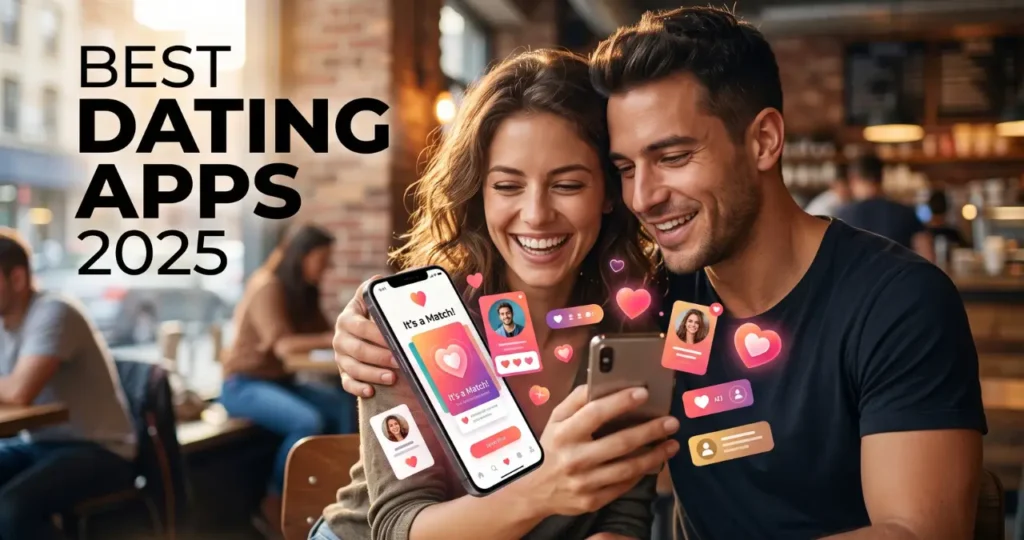
8. Coffee Meets Bagel — Best for Quality Over Quantity
Coffee Meets Bagel takes a more curated approach to online dating. Instead of encouraging users to swipe endlessly through a large stream of profiles, it presents a smaller selection of potential matches.
The service describes its approach around curated matches, while Apple notes that users receive a manageable group of potential “Bagels” and can use detailed profiles and icebreakers to learn more about them.
This can appeal to people who find endless swiping exhausting.
Who should use Coffee Meets Bagel?
It is particularly suitable for someone who prefers spending more time considering fewer profiles. The trade-off is that a smaller curated pool can mean fewer potential matches than a massive swipe-based platform.
Best for: Relationship-minded users who prefer quality over quantity.
9. OurTime — Best for Singles Over 50
OurTime focuses on mature singles, making it different from mainstream apps that serve a broad age range.
For someone over 50, an age-focused service can reduce the problem of sorting through profiles that are far outside their preferred life stage.
The Independent included Ourtime among its 2025 recommendations and identified it specifically as a choice for people over 50.
Best for: Singles over 50 who want an age-focused dating environment.
10. OkCupid — Best for Detailed Preferences
OkCupid is a useful option for people who want to communicate more about their values, interests, and preferences before deciding whether to meet someone.
Its question-based approach has historically differentiated it from apps where photos dominate the initial decision.
The advantage is depth. If specific values or lifestyle preferences matter to you, having more information available can help you decide who is worth messaging.
Best for: Users who value detailed profiles and compatibility preferences.
How to Choose the Best Dating App in 2025
The best dating app is the one whose user base, matching system, and relationship culture fit your goal. Before downloading several apps, decide whether you want a serious relationship, casual dating, new friends, LGBTQ+ connections, or simply more opportunities to meet people.
Consider these five factors:
1. Your dating goal
Be honest about what you want. Hinge and eharmony may make more sense for relationship-focused dating, while Tinder offers greater flexibility for different types of connections.
2. Your age group
Age can significantly affect the quality of your experience because every app has its own demographic mix. Younger users may prefer mainstream swipe-based apps, while services such as OurTime specifically target older singles.
3. Location
Dating apps are highly dependent on local population density. An app with millions of users worldwide may still feel empty if relatively few people use it in your area.
4. Free versus paid features
You do not necessarily need a subscription to start dating online. Tinder, Bumble, Hinge, and other major platforms offer free functionality, while paid plans mainly add convenience, visibility, filters, or additional controls.
5. Safety and privacy
Avoid sharing sensitive personal information too quickly. Keep early conversations inside the app, arrange first meetings in public places, and use blocking or reporting tools when necessary.
Tinder, for example, provides blocking, reporting, unmatching, safety guidance, and features intended to help users prepare for meeting someone offline.
Best Dating Apps 2025 by Dating Goal
If you want a quick decision, match your goal with the app rather than choosing based only on popularity.
- Best for serious relationships: Hinge or eharmony
- Best for casual dating: Tinder
- Best for broad discovery: Tinder
- Best for conversation-focused dating: Hinge or Bumble
- Best for LGBTQ+ women: HER
- Best for gay and bisexual men: Grindr
- Best for singles over 50: OurTime
- Best for detailed preferences: OkCupid
- Best for curated matches: Coffee Meets Bagel
- Best for traditional online dating: Match
These categories are more useful than declaring one app the absolute winner. A dating app that works extremely well for a 25-year-old looking for casual dates may be a poor choice for a 45-year-old seeking marriage.
Are Paid Dating Apps Worth It?
Paid dating apps can be worthwhile when a premium feature solves a specific problem, but paying does not guarantee better matches or a relationship. Subscriptions generally provide more control, visibility, filtering, or access to additional features.
For example, Tinder’s paid tiers can provide unlimited likes, Passport, visibility tools, and the ability to see people who have already liked you, depending on the plan. Hinge’s paid tiers similarly add features such as unlimited likes, advanced filters, and enhanced recommendations.
A sensible approach is to use the free version first. If you consistently encounter a specific limitation, then consider whether the paid feature actually addresses it.
How to Get Better Results From Dating Apps
A strong profile is usually more important than downloading five different apps. Use recent photos, write specific profile answers, clearly communicate what you want, and send messages that reference something in the other person’s profile.
Avoid generic openings such as “hey” when you have an easy conversation starter available. If someone’s profile mentions hiking, cooking, travel, music, or a particular hobby, ask a genuine question about it.
Also, do not measure success only by the number of matches. A smaller number of meaningful conversations can be more valuable than dozens of matches that never become dates.
Final Verdict: Which Dating App Should You Try?
There is no single best dating app for everyone. Hinge is a strong all-around choice for relationship-focused users, Tinder is particularly useful for broad discovery and flexible dating goals, and Bumble offers another strong option for people who want more structured conversation features.
For specific audiences, eharmony is worth considering for long-term relationships, Grindr and HER serve important LGBTQ+ dating communities, and OurTime focuses on older singles.
The smartest strategy is to choose one or two apps that match your goal, build a strong profile, and give them enough time to evaluate the quality of conversations rather than constantly switching platforms.
Frequently Asked Questions
What is the best dating app in 2025?
Hinge is one of the strongest choices for people seeking serious relationships, while Tinder is a better fit for broad discovery and flexible dating goals. The best choice ultimately depends on what you want.
Which dating app is best for serious relationships?
Hinge and eharmony are strong options for serious dating. Hinge emphasizes profiles, prompts, and conversations, while eharmony is positioned around long-term compatibility.
What is the best dating app for casual dating?
Tinder is one of the strongest choices for casual dating because it supports a wide range of connections and has a large international user base. Tinder itself says its platform supports casual and serious connections.
Is Hinge better than Tinder?
Neither is universally better. Hinge is generally more relationship-oriented and encourages conversation around profile prompts, while Tinder offers a broader and more flexible discovery experience.
Is Bumble still a good dating app?
Yes. Bumble continues to offer free dating alongside optional paid features and provides tools such as Opening Moves, Incognito Mode, video and audio calls, Snooze Mode, and Travel Mode.
What is the best dating app for people over 50?
OurTime is specifically designed for mature singles and is a natural starting point for people over 50. General platforms such as Match can also be worth considering if you want a broader dating pool.
What is the best LGBTQ+ dating app?
The best choice depends on the community you’re seeking. Grindr is particularly prominent among gay and bisexual men, while HER focuses on LGBTQ+ women and queer community connections.
Do you have to pay for dating apps?
No. Major apps including Tinder, Bumble, and Hinge provide free functionality. Paid subscriptions add optional features such as additional likes, filters, visibility tools, or other controls.
Which dating app has the most users?
Tinder is one of the world’s largest dating apps and says it is available in 190 countries with more than 55 billion matches made since launch. However, global reach does not necessarily mean it has the largest dating pool in every individual city.
Are dating apps safe?
Dating apps can be used safely when you protect personal information, keep early conversations on the platform, verify who you are meeting, and choose a public location for a first date. Use the app’s block, report, and unmatch features if someone behaves suspiciously or makes you uncomfortable.