









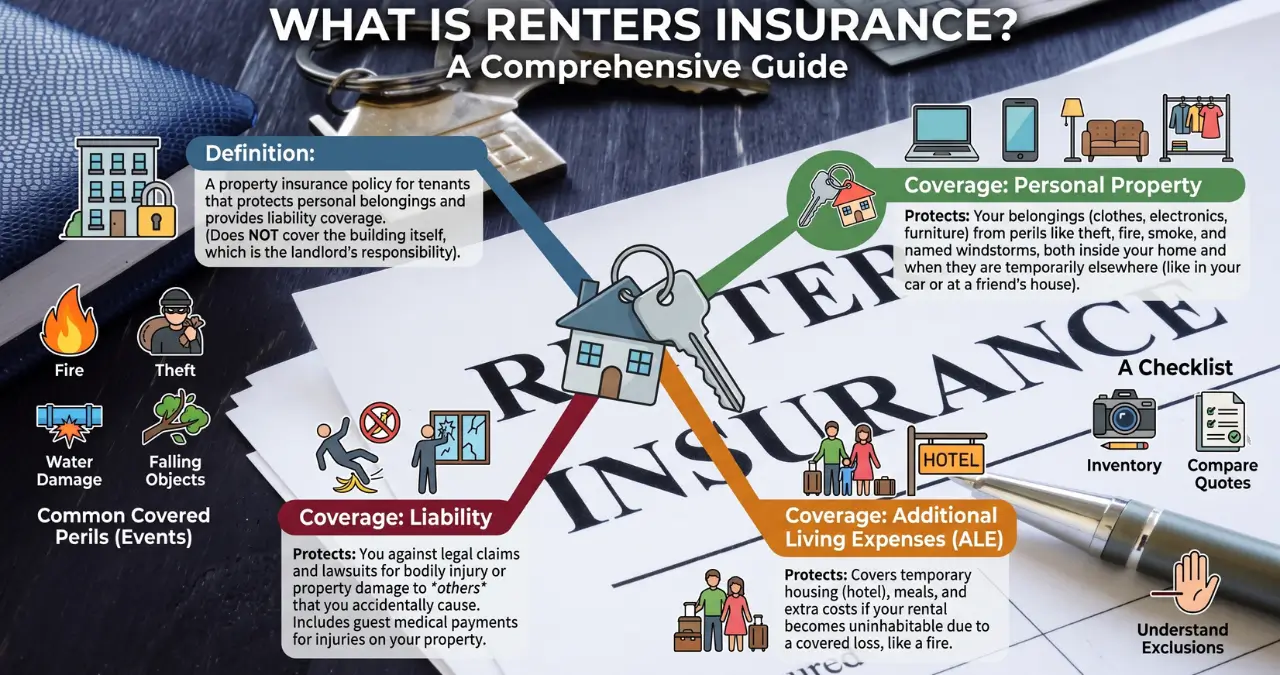
Renters insurance is a type of insurance designed to protect people who rent an apartment, house, or condominium. It generally covers your personal belongings, personal liability, and certain additional living expenses if a covered event makes your rental home temporarily unlivable.
A common misconception is that a landlord’s insurance protects everything inside a rental property. It usually does not. The landlord’s policy generally protects the building itself, while renters insurance can protect the tenant’s belongings and provide liability coverage.
For example, if a covered fire damages your apartment, your landlord’s insurance may help repair the building. Your renters policy may help pay for your damaged furniture, clothing, electronics, and other covered possessions.
What Is Renters Insurance and How Does It Work?
Renters insurance is a policy that transfers certain financial risks from the tenant to an insurance company in exchange for a premium. You choose coverage limits and a deductible, then the insurer pays covered losses according to the policy terms.
The exact protection varies by insurer and policy, but renters insurance commonly includes three major areas: personal property, personal liability, and additional living expenses.
Personal property coverage
Personal property coverage helps protect belongings such as:
- Furniture
- Clothing
- Computers and other electronics
- Kitchen equipment
- Bicycles
- Books
- Household items
Depending on the policy, covered causes of loss can include events such as fire, smoke, theft, vandalism, lightning, windstorm, explosion, and certain types of water damage. Policies also contain exclusions, so you should not assume every type of damage is covered.
Personal liability coverage
Liability coverage can protect you financially if you are legally responsible for another person’s bodily injury or property damage. It may also help pay legal defense costs, subject to the policy’s limits and conditions.
For example, suppose a visitor slips inside your apartment and claims you were responsible for the injury. Your renters policy may provide liability protection if the circumstances are covered.
Additional living expenses
If a covered event makes your rental home uninhabitable, additional living expenses (ALE) coverage may help pay certain extra costs while you temporarily live elsewhere.
Depending on the policy, this can include expenses such as temporary lodging and some additional food costs. ALE generally covers the increase above your normal living expenses rather than simply paying every expense you have. Limits and time restrictions can apply.
What Does Renters Insurance Cover?
Renters insurance can cover much more than stolen furniture. A typical policy can combine protection for your possessions with liability protection and assistance with certain temporary living costs after a covered loss.
The important point is that coverage depends on the specific policy. Two renters policies can have different limits, deductibles, covered causes of loss, exclusions, and optional endorsements.
Common areas of coverage include:
| Coverage | What it can help with |
|---|---|
| Personal property | Damage, destruction, or theft of covered belongings |
| Personal liability | Certain claims involving bodily injury or property damage for which you are legally responsible |
| Medical payments to others | Certain medical expenses for eligible injuries, subject to policy terms |
| Additional living expenses | Certain extra costs when a covered loss makes your rental temporarily unlivable |
| Off-premises property | Covered belongings that are stolen or damaged away from home, depending on the policy |
Many policies can also protect covered belongings while they are away from your rental home. For example, some policies may cover property stolen from your car or a hotel room, subject to the policy’s conditions and limits.
What Does Renters Insurance Not Cover?
Renters insurance does not cover everything you own or every type of damage. Common exclusions can include floods and earthquakes under standard policies, although separate insurance or endorsements may be available depending on where you live and the insurer.
It also generally does not insure the physical structure of the rental property. That responsibility normally belongs to the landlord’s property insurance.
Other exclusions can apply to particular situations, types of property, or causes of loss. Expensive jewelry, collectibles, artwork, musical instruments, or other high-value possessions may also have special limits and may require additional coverage.
Before buying a policy, read the exclusions and special limits rather than relying only on the headline coverage amount.
Renters Insurance vs. Landlord Insurance
Renters insurance and landlord insurance protect different interests. The landlord’s policy generally focuses on the building and the owner’s financial interest, while renters insurance focuses on the tenant’s belongings and liability.
Consider this example:
A kitchen fire damages an apartment.
- The landlord’s insurance may cover repairs to the building and permanently installed components.
- The tenant’s renters insurance may cover eligible damaged personal belongings.
- If the apartment becomes unlivable because of the covered loss, the tenant’s policy may provide additional living expense coverage.
- Liability coverage may apply if the tenant is legally responsible for covered damage or injury to someone else.
This distinction is one of the most important things to understand when answering the question, what is renters insurance. Having a landlord’s insurance policy does not normally mean your personal possessions are automatically insured.
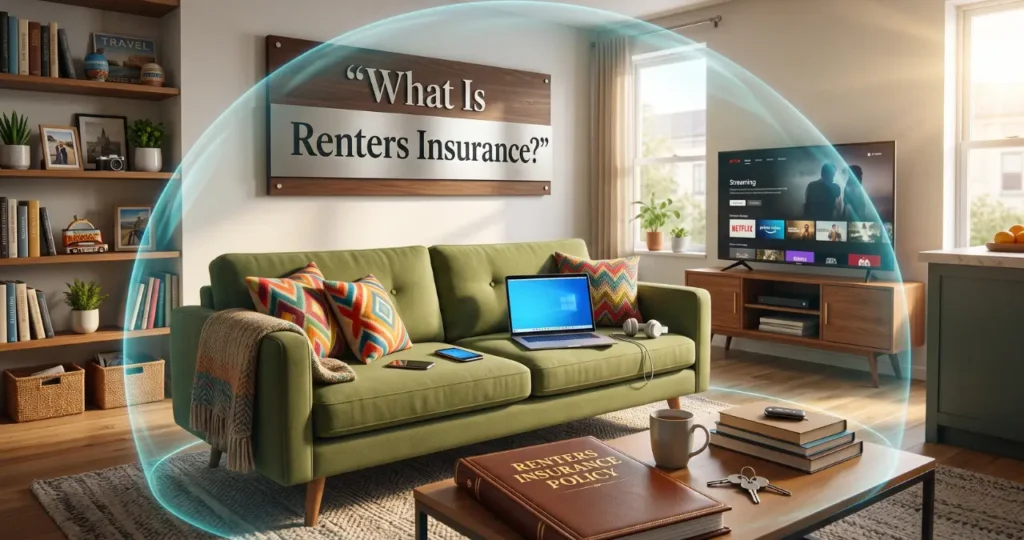
How Much Renters Insurance Do You Need?
The right amount of renters insurance depends mainly on the value of your belongings and the level of liability protection you want. Instead of guessing, create a home inventory and estimate what it would cost to replace your covered possessions.
Walk through your rental room by room. Record major items such as:
- Television
- Laptop and phone
- Furniture
- Clothing
- Appliances
- Jewelry
- Sports equipment
- Kitchenware
- Books and personal items
Keep receipts, photographs, serial numbers, or other records when practical. A detailed inventory can make it easier to document a claim and helps you avoid choosing an unrealistically low personal-property limit.
Replacement cost vs. actual cash value
This is one of the most important choices when comparing policies.
Actual cash value (ACV) generally considers depreciation when determining the value of covered property after a loss.
Replacement cost coverage generally aims to pay the amount needed to replace covered property with a comparable new item, subject to the policy’s terms and limits.
Imagine a five-year-old television is stolen. Under an actual cash value approach, depreciation can reduce the amount paid. Replacement cost coverage can provide substantially different reimbursement because it focuses on replacement rather than depreciated value.
How Much Does Renters Insurance Cost?
The cost of renters insurance varies based on factors such as location, coverage limits, deductible, property values, and the insurer. Because premiums can change significantly between individuals and locations, there is no single price that applies to every renter.
An older NAIC consumer guide cited premiums of roughly $15 to $30 per month, but that figure should not be treated as a current quote or universal price. Actual premiums in 2026 depend on the specific applicant, property, coverage, and insurer.
The best way to determine your actual price is to compare quotes using the same coverage limits and deductible.
A lower premium is not automatically the better deal. A policy with a very low price might have a higher deductible, lower property limits, or less favorable coverage for the things you actually own.
What Is a Renters Insurance Deductible?
A deductible is the amount you generally pay toward a covered property loss before the insurance company pays the remaining eligible amount. For example, with a $500 deductible and $5,000 of covered damage, the policy could pay $4,500, assuming the loss is fully covered and no other limits apply.
In general, choosing a higher deductible can reduce your premium, while a lower deductible can increase the premium.
The practical question is not simply “What is the lowest deductible?” Instead, ask how much you could comfortably pay yourself after an unexpected loss.
If paying a $1,000 deductible would create a serious financial problem, a lower deductible may be worth considering even if the premium is higher.
Is Renters Insurance Worth It?
Renters insurance can be worthwhile because replacing an entire household after a fire, theft, or other covered event could cost far more than many renters expect. It can also provide liability protection and help with eligible additional living expenses after a covered loss.
Consider someone renting a furnished apartment with a laptop, smartphone, television, clothing, furniture, kitchen equipment, and other possessions. Even without owning luxury items, the replacement cost of everything could quickly become substantial.
The decision ultimately depends on your circumstances, finances, possessions, lease requirements, and risk tolerance.
You should also check your lease. Some landlords require tenants to maintain renters insurance and may specify minimum liability limits.
How to Choose the Right Renters Insurance
Choosing a policy should involve more than comparing monthly premiums. Compare the coverage limits, deductible, exclusions, claim conditions, and whether the policy uses actual cash value or replacement cost for personal property.
Before purchasing, check these points:
- Personal property limit: Is it enough to replace your belongings?
- Liability limit: Is the protection adequate for your circumstances?
- Deductible: Could you comfortably pay it after a covered loss?
- Replacement cost: Does the policy offer replacement cost or actual cash value?
- Special limits: Are expensive possessions subject to lower sublimits?
- Exclusions: Are important risks in your location excluded?
- Additional living expenses: What limits and time restrictions apply?
- Discounts: Does the insurer offer discounts for bundling or qualifying safety features?
For expensive possessions, ask whether an endorsement or separate coverage is necessary. Valuable jewelry, collectibles, artwork, and similar items can have special limitations under standard policies.
How to Save Money on Renters Insurance
You can often reduce the cost of renters insurance by comparing multiple insurers and asking about available discounts. Some insurers offer discounts when you bundle renters insurance with another policy or have qualifying security and safety features. Discounts vary by insurer and location.
However, do not reduce coverage simply to obtain the lowest possible premium. Saving a few dollars each month is less useful if your coverage limit cannot replace your belongings after a major loss.
A better approach is to identify the coverage you actually need first, then compare prices for similar policies.
What Is Renters Insurance? A Simple Example
Suppose you rent an apartment and a covered fire damages the unit and destroys $20,000 worth of your belongings.
Your landlord’s insurance generally addresses the building rather than your personal possessions. Your renters insurance may cover eligible belongings up to your personal-property limit, minus the applicable deductible and subject to the policy’s conditions.
If you cannot live in the apartment while covered repairs take place, additional living expenses may help with eligible extra costs. If someone else claims you caused covered property damage or bodily injury, the liability portion of your policy may also provide protection.
That combination explains why renters insurance is more than simply “insurance for your stuff.” It can provide several forms of financial protection within one policy.
Frequently Asked Questions
What is renters insurance in simple terms?
Renters insurance protects a tenant’s covered belongings and can provide liability protection and additional living expense coverage. It generally does not insure the building itself, which is normally the landlord’s responsibility.
Is renters insurance required by law?
There is no universal rule requiring every renter to purchase renters insurance. However, a landlord or lease can require a tenant to maintain insurance, so check your rental agreement and applicable local requirements.
Does renters insurance cover theft?
Many renters policies cover theft of covered personal property, subject to the policy’s deductible, limits, exclusions, and conditions. Some policies can also cover eligible belongings stolen away from the rental property.
Does renters insurance cover a roommate?
Do not assume that a roommate is automatically covered. Coverage for roommates depends on the policy and how the people living in the property are insured. Ask the insurer whether each roommate needs a separate policy.
Does renters insurance cover a landlord’s property?
Generally, renters insurance is designed to protect the renter’s covered personal property rather than the landlord’s building. Damage to the structure is typically the landlord’s responsibility, although a tenant can potentially have liability for certain damage they cause.
Does renters insurance cover flooding?
Standard renters insurance policies generally do not cover flooding. Separate flood insurance may be available, depending on your location and circumstances.
Does renters insurance cover earthquakes?
Standard renters insurance generally does not cover earthquake damage. Earthquake coverage may be available separately or through an endorsement, depending on the insurer and location.
Does renters insurance cover a laptop outside the home?
Many policies provide some off-premises coverage for covered personal belongings, but the exact conditions and limits vary. Check your policy before assuming a laptop or other valuable item is fully protected outside your rental.
What is the difference between replacement cost and actual cash value?
Actual cash value generally accounts for depreciation when valuing a covered item after a loss. Replacement cost coverage generally focuses on the cost of replacing the item, subject to the policy’s terms and limits.
What should I do before buying renters insurance?
Create a home inventory, estimate the replacement value of your belongings, compare liability limits and deductibles, review exclusions, and check whether valuable possessions need additional coverage. Comparing policies with the same limits makes price comparisons much more meaningful.